Healthy Meals for Busy Moms: A Simple, Realistic Guide
Being a mom is a full-time job, and figuring out dinner shouldn't feel like a second one. This guide offers simple, realistic strategies for creating healthy meals for busy moms, focusing on flexible nutrition, smart meal prep, and enjoying food without the stress or guilt.
Why Does Healthy Eating Feel So Hard for Busy Moms?
Finding time to create healthy meals for busy moms can feel like an impossible task. If you're juggling work, school drop-offs, soccer practice, and a million other things, the last thing you have energy for at the end of the day is a complicated recipe. I hear this from so many of the women I coach. It's not that you don't want to eat well; it's that you're exhausted by the sheer mental load of planning, shopping, cooking, and cleaning, all while trying to please a family of picky eaters.
This is what we call decision fatigue. After making countless choices all day, your brain is tired. The easiest option—ordering a pizza or hitting a drive-thru—often wins. Please hear me when I say this: that is not a personal failure. It's a sign that the system you're using isn't working for your life. The good news is that you don’t need more willpower or a restrictive diet. You just need a better, simpler strategy that fits into your already-packed schedule.
How Can I Build a Balanced Plate Without Counting Calories?
The best way to create healthy meals is to stop thinking about restriction and start thinking about addition. My coaching philosophy is built on flexible nutrition, which means no food is off-limits. Instead of counting every calorie, we focus on building balanced plates that give your body the fuel it needs. It’s a simple formula that you can apply to any meal, whether you're at home or eating out.
A balanced plate includes four key components:
- Protein: A palm-sized portion of a lean protein source like chicken, fish, tofu, or lentils. Protein is crucial for keeping you full and satisfied.
- Carbohydrates: A fist-sized portion of a high-fiber carbohydrate like quinoa, brown rice, sweet potatoes, or whole-wheat pasta. Carbs are your body's primary energy source.
- Healthy Fats: A thumb-sized portion of healthy fats from sources like avocado, nuts, seeds, or olive oil. Fats are essential for hormone health and nutrient absorption.
- Vegetables: At least one to two fistfuls of non-starchy vegetables. Fill up on color! Think broccoli, spinach, bell peppers, zucchini—the more, the better.
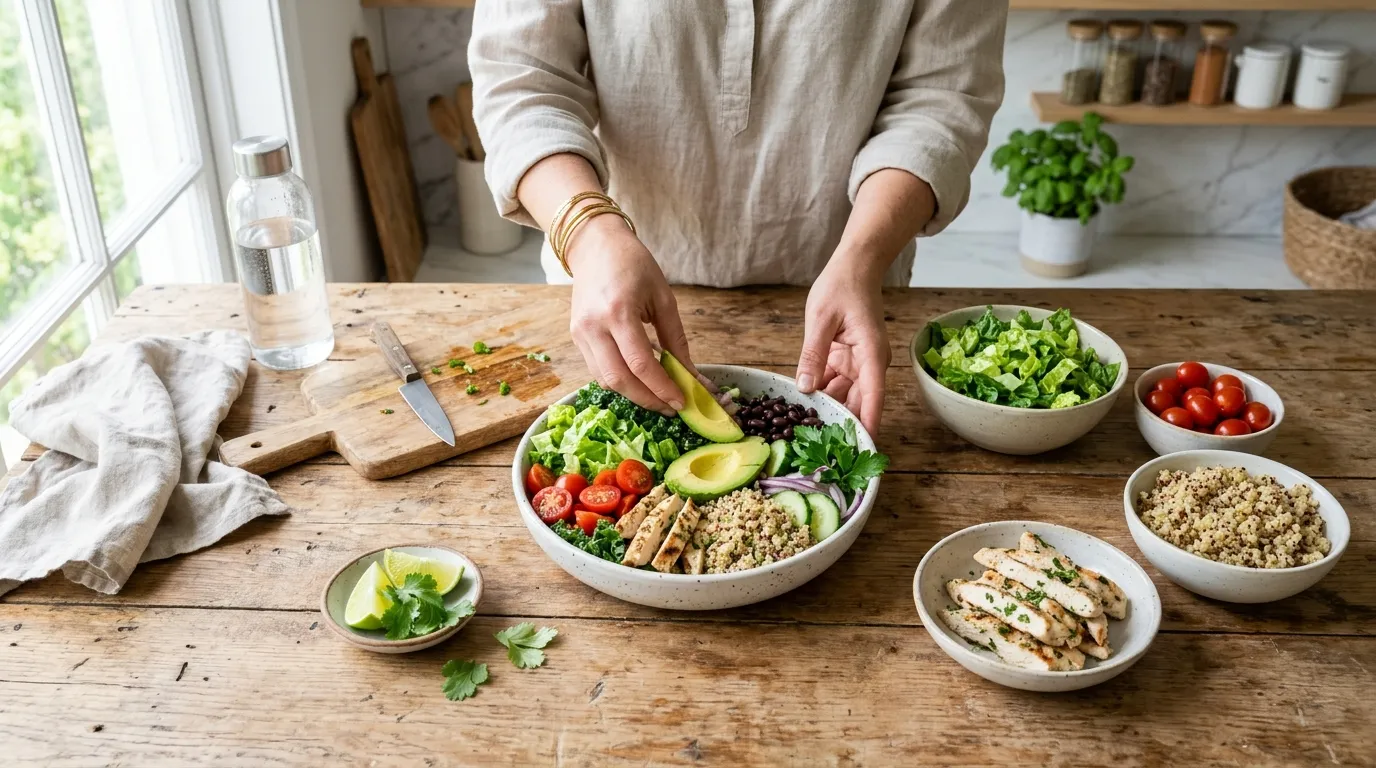
A simple meal idea following this template is a “power bowl.” Start with a base of quinoa (carb), top it with grilled chicken strips (protein), add a scoop of guacamole (fat), and load it up with sautéed bell peppers and onions (veggies). This approach, recommended by sources like the Dietary Guidelines for Americans, helps ensure you're getting a mix of macronutrients and micronutrients to keep your energy levels stable and your body nourished, without the stress of tracking.
What Are Some Time-Saving Meal Prep Strategies?
Meal prep is the ultimate act of kindness to your future self. It doesn’t have to mean spending your entire Sunday packing identical meals into a dozen plastic containers. Even small steps can make a huge difference during a hectic week. The goal is to make healthy choices the easy choices.
Think of meal prep on a spectrum. On one end, you have full meal prep, where you cook and portion entire meals. On the other, you have ingredient prep, which is often more flexible and less overwhelming. This might mean simply washing and chopping vegetables, cooking a batch of rice, or grilling a few chicken breasts to use in different ways throughout the week. This “component prep” method allows you to assemble quick meals in minutes.
Here are a few practical steps to get started:
- Start Small: Don't try to prep every meal for the week. Begin by prepping just one thing. Maybe it's pre-chopping onions and peppers for a stir-fry or making a big batch of oatmeal for breakfast.
- Batch Cook Grains and Proteins: Cook a large pot of quinoa or brown rice. Bake or grill a family pack of chicken breasts or thighs. Store them in the fridge to easily add to salads, bowls, or wraps.
- Embrace Your Freezer: Double your dinner recipes and freeze half for a future night when you know you'll be short on time. Soups, chilis, and casseroles are perfect for this.
- Create a “Grab-and-Go” Station: Portion out healthy snacks like nuts, fruit, yogurt cups, or hard-boiled eggs so you have something nutritious to grab when you're running out the door.
If you need inspiration for simple and delicious recipes, my Meal Library has over 100 options that are perfect for busy families, complete with full macro breakdowns and downloadable PDFs.
How Do I Handle Healthy Eating with Family Meals?
One of the biggest hurdles for moms is navigating different tastes and preferences, especially with picky eaters. The idea of making multiple meals every night is exhausting and unsustainable. My advice is always to stick to the “one family, one meal” rule. You are not a short-order cook.
The key is to make meals adaptable. Deconstructed meals are a game-changer. Instead of serving a finished dish, lay out all the components and let everyone build their own. This works beautifully for taco nights, pasta bowls, salads, and pizzas. Your child might only choose chicken and cheese, but they are still eating from the same meal as everyone else, and you're giving them a sense of control.
Involving kids in the process can also make a huge difference. Let them help with age-appropriate tasks like washing vegetables, stirring ingredients, or setting the table. When they have a hand in making the meal, they're often more likely to try it. Remember, your role is to provide the healthy options; their role is to decide what and how much to eat from what's offered. It takes pressure off everyone.
Can I Still Eat Out and Enjoy My Favorite Foods?
Absolutely! A healthy lifestyle is not about perfection; it’s about balance. Banning your favorite foods or avoiding social situations will only lead to feelings of deprivation and eventually cause you to abandon your efforts. The goal is to build a way of eating that you can sustain for life, and that includes pizza nights, birthday cake, and date nights out.
When you eat out, you can still apply the balanced plate principles. Most restaurants will have options that fit. Look for a lean protein and a side of vegetables. Don't be afraid to make special requests, like asking for sauce on the side or swapping fries for a side salad. But also, if you really want the burger and fries, get them! Enjoy it, savor it, and move on. One meal will not derail your progress.
This is a core concept I teach in my 12 Week Transformation program. We work on building a healthy relationship with food where guilt has no place. By learning to incorporate your favorite foods mindfully, you eliminate the all-or-nothing cycle and create true, lasting freedom around food.
How Madison Hansen Health Coaching Helps Busy Moms Eat Healthy
At Madison Hansen Health Coaching, I help busy moms create sustainable healthy eating habits through personalized one-on-one support in my 12 Week Transformation program. My approach is designed specifically for women with packed schedules who are tired of restrictive diets that don't work. As a Certified Health Coach with certifications in nutrition and behavior change, I focus on teaching you practical skills that last a lifetime.
Unlike an automated app, you get real coaching from me. We start by creating a personalized nutrition plan that is flexible and doesn't ban any food groups. The plans are built around your life, your family's needs, and your preferences, whether you're vegan, gluten-free, or have other dietary considerations. Through weekly check-ins and direct messaging, we make adjustments to ensure the plan is working for you, helping you navigate challenges like busy weeks, picky eaters, and social events. The goal isn't to make you dependent on coaching forever but to empower you with the knowledge and habits to confidently manage your nutrition on your own.
Quick Takeaways
- Building healthy meals is about adding nutritious foods, not restricting your favorites.
- Focus on a balanced plate: combine a protein, a carb, a healthy fat, and lots of veggies at every meal.
- Even small amounts of meal prep, like chopping veggies or batch-cooking a grain, can save significant time.
- Serve family meals “deconstructed” to empower picky eaters and avoid being a short-order cook.
- Consistency beats perfection. Enjoy all foods mindfully and without guilt as part of a balanced lifestyle.
You don't need another diet. You need a sustainable plan that fits your real life. If you're ready to stop the cycle of restriction and build a healthier relationship with food, I'd love to chat. You can book a free, no-pressure 20-minute discovery call with me to learn more about my approach and see if we're a good fit. Click here to find a time that works for you.
Frequently Asked Questions
What are some essential pantry staples for quick, healthy meals?+
I recommend keeping your pantry stocked with canned beans (like chickpeas and black beans), lentils, canned tuna or salmon, whole grains like quinoa and brown rice, whole-wheat pasta, low-sodium broths, and canned tomatoes. These items have a long shelf life and can form the base of many quick and nutritious meals like soups, salads, and grain bowls.
How can I avoid relying on takeout when I'm too tired to cook?+
Having a few 'emergency meals' on hand is a great strategy. Keep some simple, healthy freezer meals ready to go, like a frozen chili or soup you made ahead of time. Also, having ingredients for a 15-minute meal, like whole-wheat pasta with jarred sauce and frozen veggies, can be a lifesaver on those extra-tiring nights.
Are frozen fruits and vegetables as healthy as fresh ones?+
Yes, absolutely! Frozen produce is flash-frozen at its peak ripeness, which locks in nutrients. In some cases, frozen fruits and vegetables can even be more nutrient-dense than fresh ones that have been transported long distances or have been sitting on a shelf for a while. They are a fantastic, convenient, and budget-friendly option for busy moms.
How can I get my kids to eat healthier without a fight?+
One of the best strategies is to involve them in the process. Let them help you choose a new vegetable at the store or assist with simple cooking tasks. Another great tip is to serve meals 'deconstructed' or family-style, allowing them to build their own plate from the healthy options you provide. This gives them a sense of autonomy and makes them more likely to try new things.