How to Build Healthy Habits That Stick: A Coach's Guide
Tired of starting and stopping? Learn how to build healthy habits that stick with these simple, practical strategies for busy women. No perfection required.
Why Is It So Hard to Make New Habits Stick?
It’s difficult to make new habits stick because we often aim too high, too fast, and rely on motivation, which is an unreliable resource. Your brain is wired for efficiency and naturally resists change, preferring the well-worn paths of your current routines. Understanding this is the first step to working with your brain, not against it.
Most of our automatic behaviors follow a simple neurological pattern called the "Habit Loop," which consists of three parts: a cue, a routine, and a reward. The cue is the trigger that tells your brain to go into automatic mode. The routine is the physical or emotional action you take. The reward is the positive reinforcement that tells your brain this loop is worth remembering for the future. Over time, this loop becomes more and more automatic.
You’ve probably heard that it takes 21 days to form a habit. I’m here to tell you that’s a myth. Research shows the reality is much more varied. A study published in the European Journal of Social Psychology found that, on average, it takes about 66 days for a new behavior to become automatic, but the range was anywhere from 18 to 254 days. The key takeaway isn't the number, but the understanding that real change takes time and consistent repetition. There's no magic finish line; the goal is simply to keep showing up.
How Can I Start Building a Habit Without Feeling Overwhelmed?
You can start building a habit without feeling overwhelmed by making it so small and easy that you can’t say no. Forget about overhauling your entire life overnight. The secret is to start with a "tiny habit"—a behavior that takes less than two minutes to do. The goal isn't to see massive results on day one, but to build the neural pathways that make the behavior automatic.
A powerful technique to use here is called "habit stacking." This involves linking your new, tiny habit to an existing one you already do without thinking. The formula is simple: "After [current habit], I will [new habit]."
Here are a few examples for a busy schedule:
- After I pour my morning coffee, I will drink a full glass of water.
- After I brush my teeth at night, I will do two minutes of stretching.
- When I close my laptop for the day, I will change into my workout clothes.
- After I sit down on the couch to watch TV, I will do five bodyweight squats.
These actions might seem insignificant, but they are the building blocks of consistency. Once doing five squats feels automatic, you can increase it to ten. Once you're consistently changing into your workout clothes, the next logical step—doing the workout—becomes much easier. You’re building momentum one tiny, successful step at a time.
What Role Does My Environment Play in Habit Formation?
Your environment is one of the most powerful—and often overlooked—drivers of your behavior. You can use willpower to make a good choice once or twice, but if your surroundings are constantly working against you, you’ll eventually run out of energy. The key is to design an environment that makes your desired habits the easiest and most obvious choice.
This is about reducing friction for your good habits and increasing friction for the ones you want to break. Think about how you can set up your space for success:
- Make it visible: If you want to drink more water, keep a water bottle on your desk at all times. If you want to take a vitamin, put the bottle next to your coffee maker.
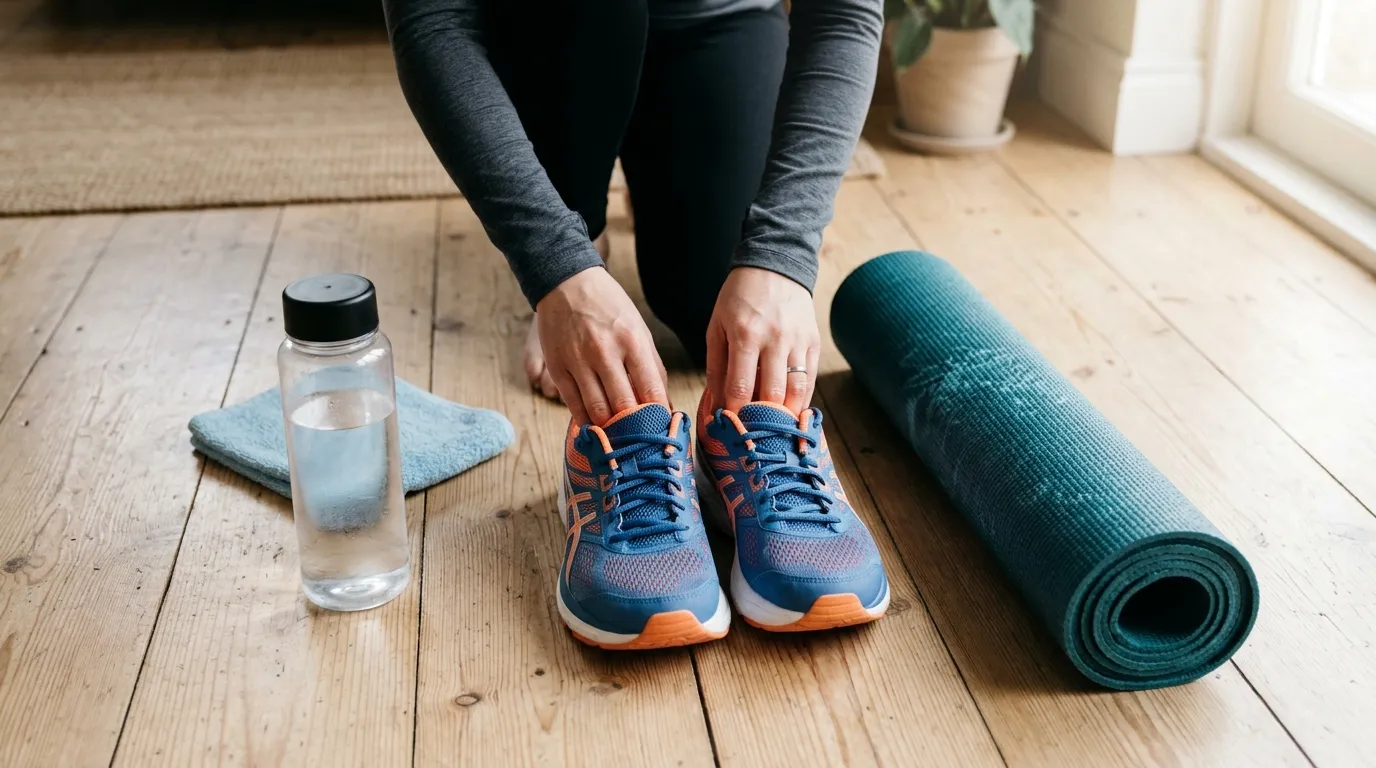
- Prepare in advance: Lay out your workout clothes, shoes, and socks the night before. This removes a crucial decision point when you’re tired in the morning.
- Create a dedicated space: Have a specific corner of your room with a yoga mat rolled out, ready for a quick stretch or workout session.
- Stock your kitchen for success: Wash and chop veggies for snacks when you get home from the grocery store. Keep healthy options at eye level in your fridge and pantry. If you need inspiration for easy, healthy meals, my Meal Library has over 100 recipes to get you started.
By curating your environment, you rely less on motivation and more on smart systems that guide you toward your goals effortlessly.
How Do I Stay Consistent When I Lose Motivation?
You stay consistent by focusing on systems and your identity, not just fleeting motivation, and by having a plan for when you inevitably fall off track. Motivation is an emotion; it comes and goes. Consistency is a practice built on discipline and habits.
Instead of focusing only on the outcome (e.g., losing a certain amount of weight), focus on the type of person you want to become. This is the idea behind identity-based habits. Ask yourself: "Who is the person I want to be?" Maybe she's a person who is active, strong, and prioritizes her well-being. Then, ask: "What would that person do today?" She would probably move her body, even if just for 15 minutes.
The biggest threat to consistency is the all-or-nothing mindset. You miss one workout and feel like you've failed, so you give up for the rest of the week. The rule I teach my clients is to never miss twice. Life happens. You’ll have days where you’re sick, exhausted, or just can’t fit it in. That's okay. The goal isn't perfection; it's to get right back on track with your next planned workout. One missed day is a blip; two missed days is the start of a new, undesirable habit.
Simple At-Home Workout (Bodyweight or Dumbbells)
Here is a simple, effective workout you can do anywhere. Aim for 2-3 times per week on non-consecutive days.
- Bodyweight Squats or Dumbbell Goblet Squats: 3 sets of 10-15 reps
- Push-ups (on knees or toes): 3 sets of as many reps as you can with good form
- Glute Bridges: 3 sets of 15-20 reps
- Dumbbell Rows (or use a resistance band): 3 sets of 10-12 reps per arm
- Plank: 3 sets, holding for 30-60 seconds
For beginners: Start with 2 sets of each exercise and focus on your form. Rest for 60-90 seconds between sets. The goal is to finish feeling good, not completely exhausted.
Try This Week
- Pick One Tiny Habit: Choose one new behavior that takes less than two minutes (e.g., 10 push-ups against the wall, drinking one glass of water before coffee).
- Use Habit Stacking: Decide which existing, automatic habit you will pair your new tiny habit with. Write it down: "After I ___, I will ___."
- Design Your Environment: Make one small change to your environment to make your new habit easier. Lay out your workout clothes, put a water bottle by your bed, or place an apple on the counter for a snack.
How Does Madison Hansen Health Coaching Help Women Build Habits That Stick?
At Madison Hansen Health Coaching, I help women build lasting habits through personalized, one-on-one support that focuses on sustainable systems rather than quick fixes. My entire coaching philosophy is built on the understanding that for changes to last, they have to fit into your real, busy life. As an ACE Behavior Change Specialist, I'm trained in the science of what it actually takes to make new behaviors automatic.
In my 12 Week Transformation program, we don't just talk about goals; we build the systems to reach them. This includes creating custom training plans that work with your schedule and equipment (even if that's just your own bodyweight at home) and developing a flexible nutrition approach with no foods off-limits. We use weekly check-ins and direct messaging to provide the accountability and real-time adjustments you need to navigate challenges and stay consistent. My goal isn't to keep you as a client forever; it's to teach you the skills and habits you need to confidently manage your health for life. You can learn more about my approach on my about page.
Key Takeaways
- Building healthy habits takes an average of 66 days, not 21. Consistency is more important than speed.
- Start with a "tiny habit" that's too small to fail, and use "habit stacking" to link it to an existing routine.
- Design your environment to make good choices easier and bad choices harder. Reduce friction for the habits you want to build.
- Focus on identity-based habits and aim for consistency, not perfection. Never miss twice.
Building new habits is a skill, and like any skill, it gets easier with practice. Be patient and compassionate with yourself, and celebrate the small wins along the way. You don't have to do it perfectly; you just have to do it consistently.
If you're ready for a personalized plan and the support to make your healthy habits finally stick, I invite you to book a free 20-minute discovery call with me. We can talk about your goals and see if we're a good fit. You can also grab my Free 5-Day Health Reset to get a taste of my approach.
Frequently Asked Questions
How long does it really take to form a habit?+
While the old myth says 21 days, scientific research shows it typically takes much longer. The average is about 66 days for a new behavior to feel automatic, but the timeframe can range from 18 to over 250 days depending on the person and the complexity of the habit. The most important factor is consistency, not hitting a magic number.
What's the best way to start a new healthy habit?+
The best way is to start incredibly small with a 'tiny habit' that takes less than two minutes to complete. Then, use 'habit stacking' by linking your new tiny habit to a routine you already do automatically, like brushing your teeth or making coffee. This makes it easier to remember and integrate into your day.
What should I do if I miss a day of my new habit?+
The most important thing is to not let it derail you. Avoid the 'all-or-nothing' trap where one missed day makes you feel like a failure. The goal is consistency, not perfection. Simply get back on track the very next day. A good rule to follow is 'never miss twice'.
Is it better to change one habit at a time or many?+
It is almost always more effective to focus on changing just one habit at a time. Trying to overhaul your diet, exercise, and sleep all at once can lead to overwhelm and burnout. By focusing your energy on one small change, you dramatically increase your chances of making it stick for the long term.