The Best Home Workouts for Women Beginners to Get Started
Feeling overwhelmed about starting a fitness routine? Discover simple, effective home workouts for women beginners that you can do with little to no equipment. This guide will help you build strength, confidence, and a consistent routine that fits your busy life.
The Best Home Workouts for Women Beginners
The best home workouts for women beginners are full-body routines using bodyweight exercises like squats, lunges, and planks. Starting with 2-3 short sessions per week helps build consistency and confidence without needing a gym membership or fancy equipment. This approach makes it a convenient and effective way to begin your fitness journey right from your living room.
I talk to so many women who want to get healthier but feel completely stuck on where to begin. The gym can feel intimidating, schedules are packed, and it’s hard to know which advice to trust. If that sounds familiar, I want you to know you're not alone. The good news is that you don't need to overhaul your entire life to see real progress. Starting with simple, effective home workouts for women beginners is one of the most powerful first steps you can take.
Why Are Home Workouts So Great for Beginners?
Starting your fitness journey at home removes many of the common barriers that stop people before they even start. It’s about making movement accessible and fitting it into your real life, not the other way around.
First, there's the convenience factor. Your gym is always open! There’s no commute, no packing a gym bag, and no waiting for a machine. Whether you have 15 minutes before the kids wake up or 30 minutes during your lunch break, you can squeeze in a workout. This is a game-changer for busy women, professionals, and parents.
Second, working out at home offers privacy. When you're just starting, it's completely normal to feel self-conscious. At home, you can focus on your movements and learn proper form without worrying about who's watching. It’s your space to build confidence at your own pace.
Finally, it's incredibly cost-effective. Gym memberships and boutique fitness classes can be expensive. You can get an amazing workout using just your own body weight, which means you can start investing in your health without a big financial commitment.
What Equipment Do I Really Need to Start?
Honestly, you need very little to get started. The most important piece of equipment you have is your own body! Bodyweight exercises are fantastic for building foundational strength, improving balance, and learning proper movement patterns.
Here’s what I recommend to start:
- Your Body: This is your primary tool. Exercises like squats, push-ups, and planks are incredibly effective and require nothing else.
- A Mat (Optional): A yoga or exercise mat can make floor exercises more comfortable, but a carpeted area or a towel works just fine, too.
- Supportive Shoes: Good shoes can help with stability and prevent injury, though many bodyweight exercises can also be done barefoot.
As you get stronger and more consistent, you might consider investing in a few simple pieces of equipment to add variety and challenge, such as:
- A set of dumbbells: Start with a light to medium weight. These are versatile for adding resistance to exercises like squats, lunges, and rows.
- Resistance bands: These are inexpensive, portable, and great for both upper and lower body exercises.
But please, don't let a lack of equipment stop you. You can build a powerful and effective routine with just yourself.
What's a Good Beginner Home Workout Routine?
A great starting point is a full-body workout. This type of routine works all your major muscle groups in a single session, making it efficient and effective for building overall strength. Aim to do this workout 2-3 times per week on non-consecutive days to give your body time to recover.
Always remember to warm up before you start and cool down when you're done.
- Warm-up (5 minutes): Gentle movements to get your blood flowing. Think of things like marching in place, arm circles, leg swings, and torso twists.
- Cool-down (5 minutes): Gentle stretching of the muscles you just worked. Hold each stretch for 20-30 seconds without bouncing.
Here is a sample full-body workout. Focus on your form—it’s much more important than how many reps you can do.
Full-Body Beginner Workout
- Bodyweight Squats: 3 sets of 10-12 reps. Stand with your feet shoulder-width apart. Lower your hips back and down as if sitting in a chair, keeping your chest up. Go as low as you comfortably can, then press through your heels to return to standing.
- Modified Push-ups (on knees): 3 sets of as many reps as you can with good form. Start in a plank position on your knees. Keep your body in a straight line from your head to your knees as you lower your chest toward the floor. Press back up.
- Alternating Lunges: 3 sets of 8-10 reps per leg. Step one foot forward and lower both knees to about 90-degree angles. Your front knee should be over your ankle, and your back knee should hover just above the floor. Push off the front foot to return to the start and switch legs.
- Glute Bridges: 3 sets of 12-15 reps. Lie on your back with your knees bent, feet flat on the floor, and arms by your sides. Squeeze your glutes and lift your hips off the floor until your body forms a straight line from your shoulders to your knees. Lower back down slowly.
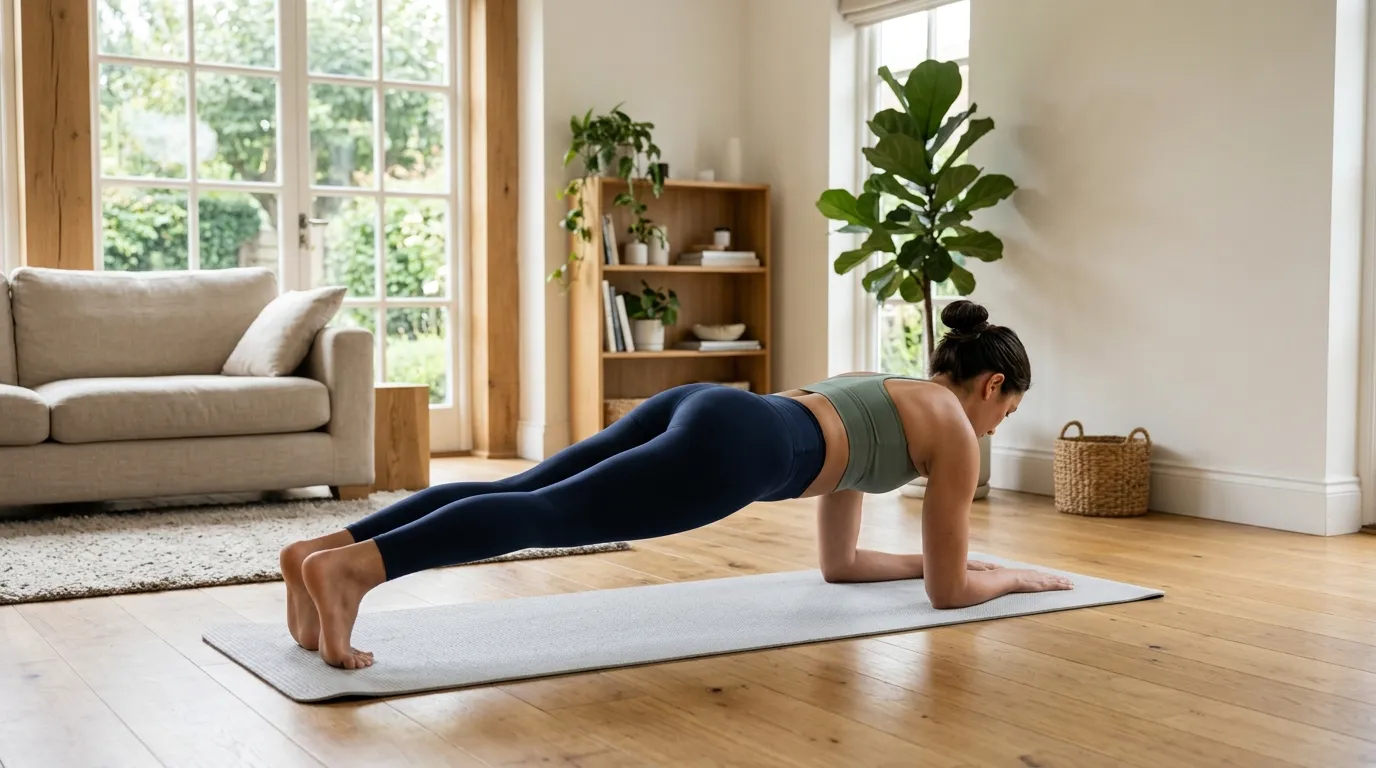
- Plank: 3 sets, holding for 20-30 seconds. Hold a push-up position (on your toes or knees), keeping your back flat and your core engaged. Don't let your hips sag!
- Bird-Dog: 3 sets of 8-10 reps per side. Start on all fours. Extend your right arm straight forward and your left leg straight back, keeping your back flat. Return to the start and switch sides.
Remember to rest for 30-60 seconds between sets. If anything causes pain, stop. The goal is to challenge yourself, not to hurt yourself.
How Can I Build a Routine That Actually Sticks?
Starting is one thing; staying consistent is another. This is where so many people struggle. The key is to focus on building sustainable habits, not on being perfect. Health organizations often recommend at least 150 minutes of moderate-intensity activity per week, but you don't have to start there. Every little bit counts.
Start Small and Build Momentum
Don't try to go from zero to working out an hour every day. That's a recipe for burnout. Start with just 15-20 minutes, 2-3 times a week. The goal is to make it feel so manageable that you can't say no. Once that feels like a solid habit, you can gradually increase the duration or frequency.
Schedule Your Workouts
Treat your workouts like any other important appointment. Block out time in your calendar. If you just hope to “find time,” other things will always get in the way. Look at your week and decide exactly when you’re going to move your body. It could be in the morning, during lunch, or after work—whatever is most realistic for you.
Let Go of the All-or-Nothing Mindset
Missed a workout? It’s okay! It doesn’t mean the week is ruined. Just get back on track with your next scheduled session. One missed workout is just a blip. A string of them happens when you let guilt and the feeling of failure take over. Consistency is what you do most of the time, not all of the time.
Try This Week:
- Schedule It: Pull out your calendar right now and schedule two 20-minute workout blocks for this week.
- Pick Your Space: Designate a small area in your home for your workouts. Clear a little space in the living room or bedroom.
- Just Press Play: Even if you don't feel motivated, commit to just doing the 5-minute warm-up. Chances are, you'll want to keep going once you start.
How Does Madison Hansen Health Coaching Create Home Workout Plans?
At Madison Hansen Health Coaching, my 12 Week Transformation program provides personalized, one-on-one coaching for women, creating custom training plans built around your schedule and available equipment, including bodyweight-only home workouts. I understand that every woman's life is different, which is why I don't use cookie-cutter plans. As a certified Health Coach and Behavior Change Specialist with over 7 years of experience, I design programs that fit into your real life.
We start with where you are right now. Whether you have zero equipment or a full set of dumbbells, I build a plan that challenges you appropriately and helps you progress safely. It’s not about endless hours of exercise; it’s about smart, effective workouts that deliver results. Paired with flexible nutrition guidance and weekly check-ins for accountability, my goal is to teach you lasting skills so you can feel strong and confident for life, not just for 12 weeks. This is real human coaching designed for busy women who are ready for a sustainable change.
Key Takeaways
- Start your fitness journey at home with simple bodyweight exercises to build strength and confidence.
- Consistency over perfection is the key; aim for 2-3 short workouts per week to build a sustainable habit.
- A balanced, full-body routine including squats, push-ups, and planks is highly effective for beginners.
- You don't need expensive equipment to get started—your own body is your most powerful tool.
- Schedule your workouts like appointments to ensure you make time for yourself.
Getting started is often the hardest part, but you are more than capable of building a healthier, stronger life. If you're tired of quick fixes and want to build habits that last, I'm here to help. You can start today by downloading my free 5-Day Health Reset guide.
If you’re ready for personalized support and a plan that truly fits your life, I invite you to book a free, no-pressure 20-minute discovery call with me. We can talk about your goals and see if we're a good fit to work together.
Frequently Asked Questions
How many times a week should a beginner woman workout at home?+
A beginner should aim for 2 to 3 workout sessions per week on non-consecutive days. This allows your body adequate time for rest and muscle recovery, which is crucial for preventing injury and building strength.
Are 20-minute home workouts effective for beginners?+
Absolutely. For a beginner, 20-minute workouts are highly effective for building foundational strength and cardiovascular fitness. The most important factor is consistency, and shorter, more frequent workouts are often more sustainable than longer, infrequent ones.
Can I build muscle with only bodyweight home workouts?+
Yes, you can definitely build muscle and improve strength with bodyweight exercises. By focusing on proper form and progressively making the exercises more challenging (e.g., more reps, more sets, or trying harder variations), you create the stimulus your muscles need to grow.
What should I do on rest days?+
Rest days are for recovery, but that doesn't mean you have to be completely sedentary. Light activities like walking, stretching, or gentle yoga, known as 'active recovery,' can help reduce muscle soreness and improve circulation. Listening to your body is key.